Whenever you commit a crime, you may pay . If you do, look at the top two cards of your library. Put one of them into your hand and the other into your graveyard. (Targeting opponents, anything they control, and/or cards in their graveyards is a crime.)
Marchesa turns every targeted spell, ability, and attack at your opponents into card filtering: pay when you commit a crime to dig two deep and stock your graveyard. You play a Grixis spellslinger/control shell loaded with cheap interaction and pingers, generating absurd card advantage while grinding the table down, then close with reanimation payoffs or a value-fueled finisher.
Relentless card advantage—almost every removal spell, counter, or attack triggers a free dig
Fills the graveyard naturally, enabling reanimation and flashback synergies
Grixis gives access to the best removal, counterspells, and tutors in the format
Cheap commander (MV 3) that immediately advances your game plan
Rewards interaction you'd run anyway, so the engine costs little deckbuilding tax
No built-in win condition—needs the deck to provide closers
Crimes must target opponents or their stuff, so blank board states leave the engine idle
The tax per crime adds up and can clog mana on busy turns
Marchesa herself is fragile and a removal magnet
Card filtering, not raw card draw—you still pitch one card each trigger
Stomp is a crime that triggers Marchesa and leaves a body, embodying the deck's plan.
Add fast mana (Mana Crypt, Jeweled Lotus, Dockside Extortionist) to comfortably pay the crime tax multiple times per turn and deploy threats early. Lean into a compact combo finish—Underworld Breach with Brain Freeze or Lion's Eye Diamond, or a reanimation line—so your card advantage actually converts to wins. Tighten the interaction suite toward the cheapest crimes (Swords to Plowshares-style removal, free counters, Deflecting Swat) to maximize triggers per mana.
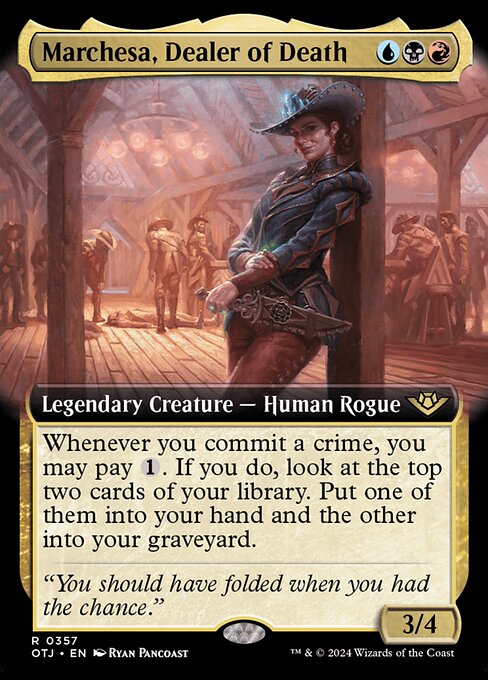


 Legendary Creature — Human Rogue








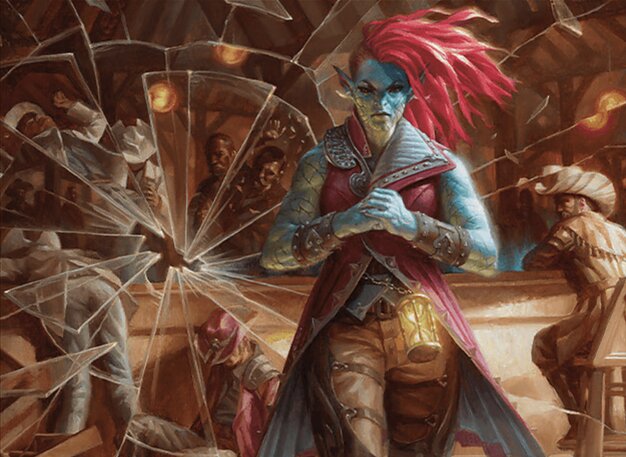
 . If you do, look at the top two cards of your library. Put one of them into your hand and the other into your graveyard. (Targeting opponents, anything they control, and/or cards in their graveyards is a crime.)